
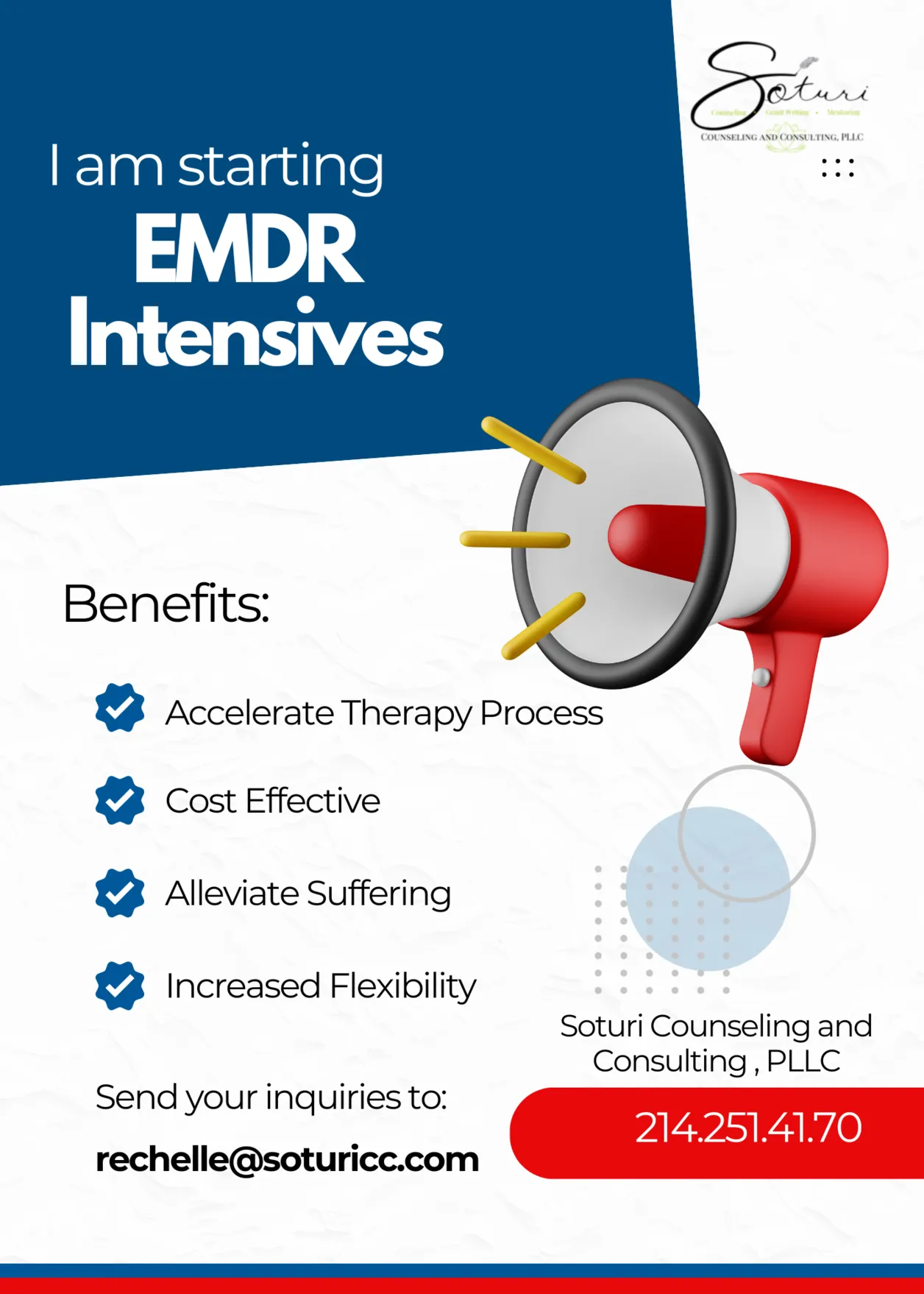
EMDR intensives are specialized, extended therapy sessions designed to provide rapid and effective treatment using Eye Movement Desensitization and Reprocessing (EMDR) therapy. These intensives typically last 2 to 6 hours per day over 2 to 4 consecutive days, but they can be adjusted to fit individual needs.
Key features of EMDR intensives include:
- Focused Treatment: Unlike traditional weekly sessions, intensives allow deep, uninterrupted work on specific issues.
- Flexibility: Sessions can be tailored to fit your schedule and treatment goals.
- Comprehensive Approach: Often combined with other therapeutic techniques like Somatic Psychotherapy and Ego State Interventions.
Benefits of EMDR intensives:
- Efficiency: Achieve results in days that might take months or years with regular therapy.
- Immediate Impact: Ideal for those who need quick relief from symptoms or cannot attend weekly sessions.
Yes, there are some potential risks and side effects associated with EMDR intensives similar to those found in standard EMDR therapy. It's important to work with a trained and experienced therapist who can help manage these risks and provide support throughout the process. Rechelle has the the knowlege, skills and abiliities to assist you in this journey.
To get started, plese complete this screening form and Rechelle will contact you. You can also look at this Frequently Asked Questions (FAQ) document to assist you in the decision making process. Also view, the Package Menu for pricing and expectations.
Scheduling an introduction call
EMDR therapy is designed to resolve unprocessed traumatic memories in the brain. For many clients, EMDR therapy can be completed in fewer sessions than other psychotherapies.
EMDR therapy helps children and adults of all ages. Therapists use EMDR therapy to address a wide range of challenges:
- Anxiety, panic attacks, and phobias
- Chronic Illness and medical issues
- Depression and bipolar disorders
- Dissociative disorders
- Eating disorders
- Grief and loss
- Pain
- Performance anxiety
- Personality disorders
- PTSD and other trauma and stress-related issues
- Sexual assault
- Sleep disturbance
- Substance abuse and addiction
- Violence and abuse
